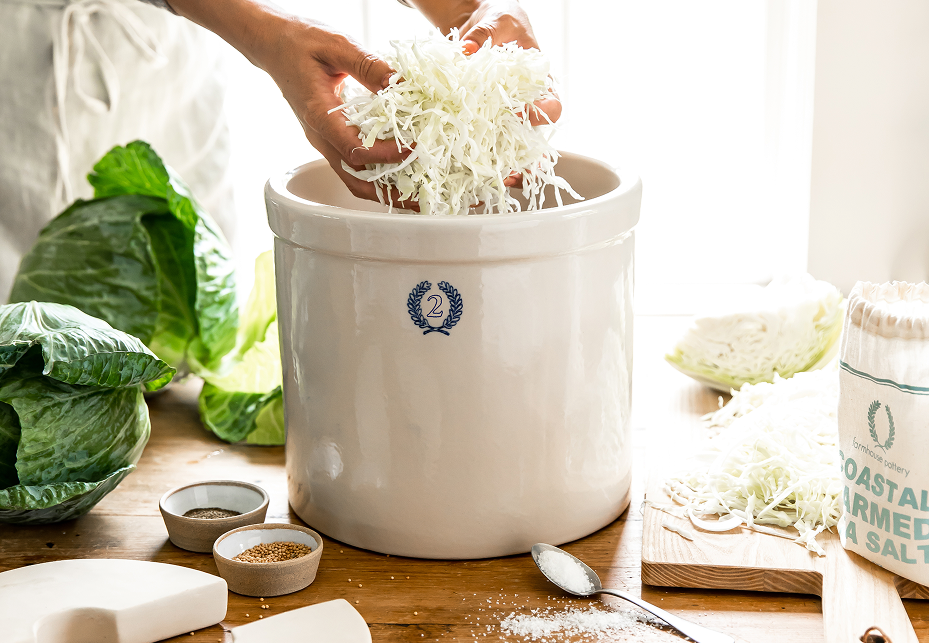
Expanding on our popular line of Laurel Crocks, we are excited to introduce the new Laurel Fermenting Crock.
In celebration of the launch, we’re sharing our Farmhouse Simple Sauerkraut recipe — a perfect introduction to the world of home fermentation. For thousands of years, sauerkraut has been a food staple across cultures. Its tangy flavor, ability to preserve the harvest through long winters, and versatility has made it a recipe that stood the test of time.
With only a few ingredients needed, you can transform a humble cabbage into a prebiotic treat. Enjoy it with sausage, add it as a layer to your reuben, or add it as a topping to your avocado toast.
Ingredients
Directions
Prep the fermenting crock by washing and sanitizing both the crock and weights. Leave to dry completely.
Remove 1–2 outer leaves from the cabbage and set aside (keep them whole). Cut out and discard the core. Finely shred the cabbage with a knife or grater. Place shredded cabbage in a large bowl.
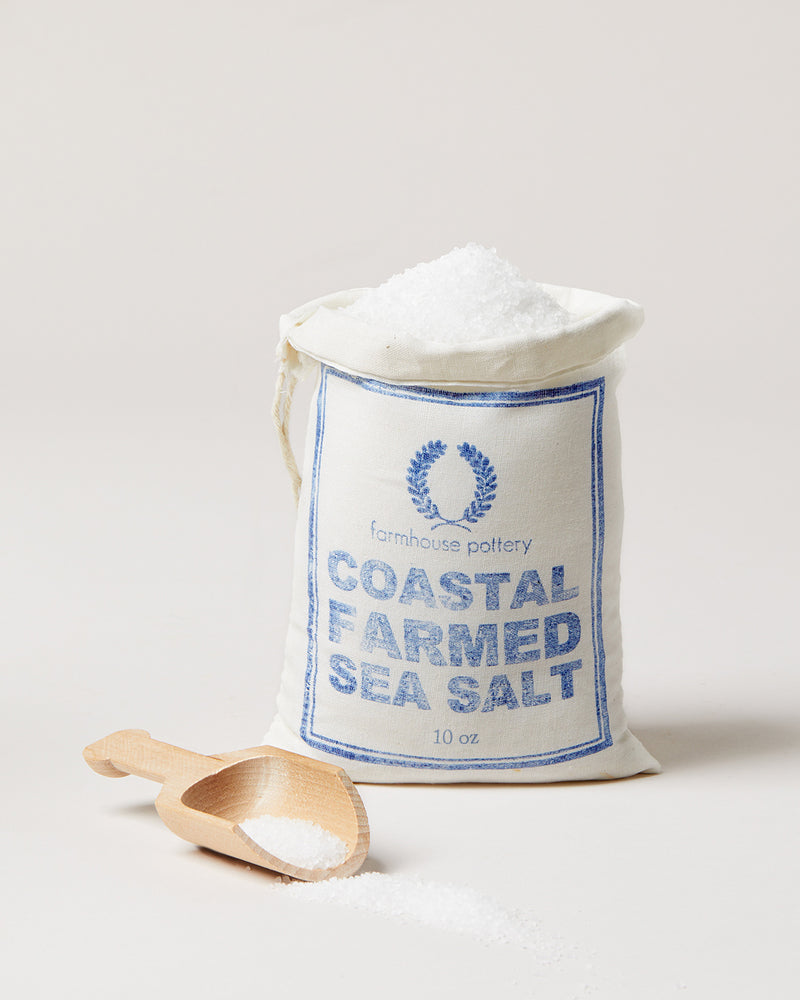
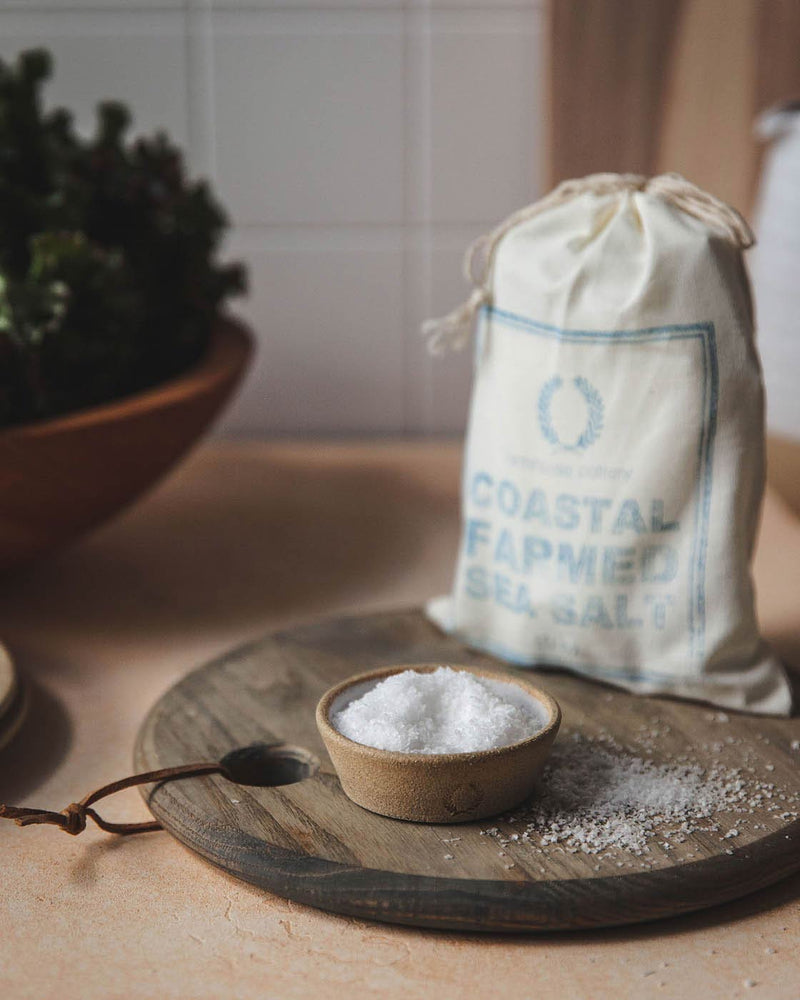
Add salt, mustard seeds, and celery seeds. Mix thoroughly with your hands, massaging the salt into the cabbage. Let sit for 15 minutes.
Use a muddler or potato masher to firmly pound the cabbage until it releases enough liquid to form a brine.
Transfer the cabbage and its brine into the fermentation crock. Press down firmly to remove air pockets. The brine should rise above the cabbage. If needed, make extra brine by dissolving 1 tbsp kosher salt in 1 cup water and add just enough to submerge the cabbage.
Place the reserved whole cabbage leaves on top of the shredded cabbage. Add fermentation weights to ensure everything stays submerged. Cover the crock with its lid. Keep it in a cool, dark place (65–75° F / 18–24° C).
Once daily, check that the cabbage remains submerged. Look for bubbling and a sweet-sour smell after a few days. If white film (kahm yeast) appears, skim it off — it's harmless.Ferment for 4–5 weeks or until it tastes how you like. Once done, transfer to jars and refrigerate. Keeps for several months.